
Canadians Balance Dreams with 2026 Housing Market
Real Estate, Housing Affordability, Market Trends
Bigger Homes, Tighter Budgets: How Canadians Are Reconciling Dreams with 2026 Housing Realities
Despite persistent affordability pressures, many Canadians continue to aspire to larger, higher-quality homes. In 2026, that aspiration is colliding with a market in transition, where easing mortgage rates and shifting regional trends offer pockets of opportunity, but structural constraints keep ownership out of reach for many households.
Housing affordability: modest relief, enduring strain
For professionals advising buyers, the 2026 affordability narrative is nuanced. On one hand, lower interest rates and softer prices in several major markets have improved headline metrics. Ratehub.ca reports that housing affordability improved in 12 of 13 major centres at the start of 2026, as benchmark prices edged down and stress-test rates slipped to around 6.40% (Ratehub.ca).
The National Bank of Canada Housing Affordability Monitor shows mortgage payments as a share of income easing to 51.6% by late 2025, the best reading in nearly four years, yet still far above the long-term average of 40.5% (Deeded). This means many households remain stretched, even as conditions technically improve. In markets such as Vancouver and Toronto, qualifying incomes have fallen, but ownership still demands a substantial share of earnings, limiting how far buyers can push for larger properties or premium locations.
On the rental side, national average rents above $2,000 per month continue to erode saving capacity, particularly in major urban centres, according to recent cost analyses (OALEP). Slightly higher vacancy rates and an expanding stock of purpose-built rentals are expected to temper rent growth over the next year, but the starting point is high. As a result, renters’ path to ownership remains long, even as they look ahead to larger homes and family-oriented neighbourhoods.
Real estate trends: a market resetting, not retreating
The national market in 2026 is best described as a reset rather than a reversal. Forecasts from Royal LePage point to approximately 1% aggregate price growth by year-end, with detached homes modestly outperforming condominiums (Royal LePage). CREA projects a 2.8% rise in the average national price, to just under $700,000, alongside a modest recovery in sales volumes (CREA).
Underneath those averages, regional divergence is sharpening. Higher-priced markets such as the Greater Toronto Area and Greater Vancouver are experiencing flat or declining prices amid swelling inventory and more cautious buyers. In contrast, comparatively affordable regions, particularly in the Prairies and parts of Quebec, are posting moderate gains as local incomes and price points remain better aligned (Ontario Housing Market).
Development trends are also shifting in response to affordability and demographic realities. PwC’s Emerging Trends in Real Estate report highlights a pivot away from investor-focused condos toward purpose-built rentals, seniors housing, and more ground-oriented product, including townhomes and row houses (PwC). CMHC, meanwhile, expects overall housing starts to soften through 2026, especially in high-cost condo segments, underscoring persistent supply constraints even as demand cools (CMHC).
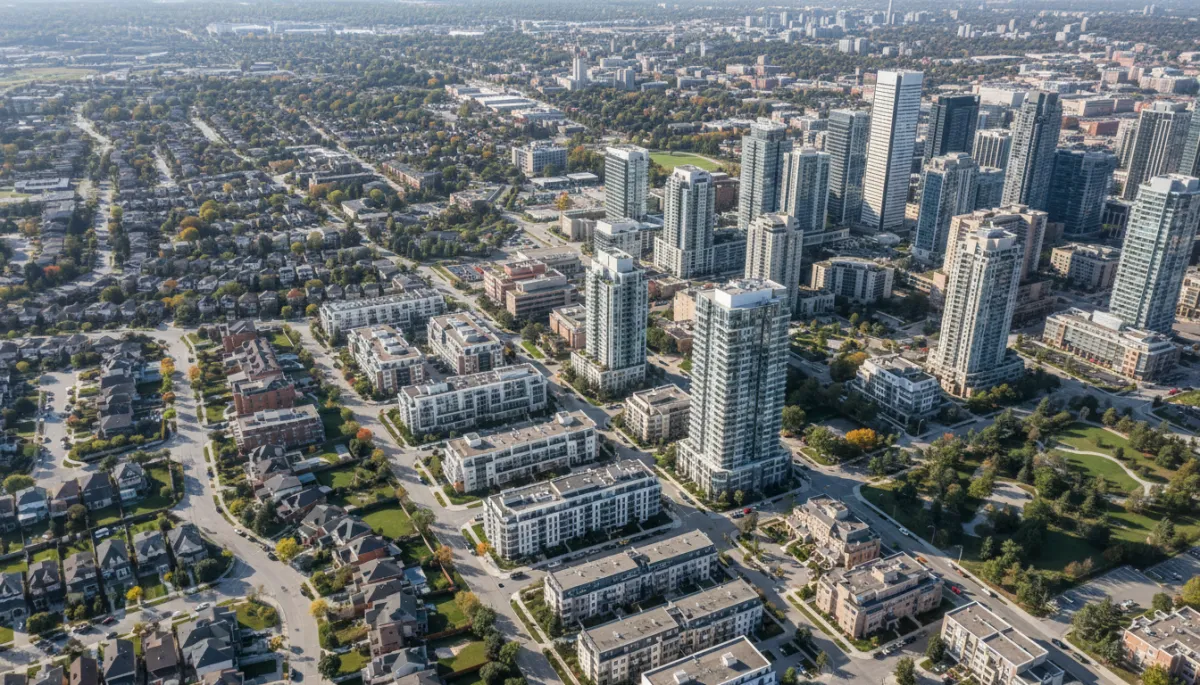
Regional shifts and new housing types are reshaping Canada’s path to ownership.
Homeownership aspirations: bigger spaces, flexible strategies
Against this backdrop, homeownership remains a central life goal. Statistics Canada and industry surveys consistently show that, despite higher borrowing costs in recent years, Canadians still associate ownership with financial security, control over their living environment, and long-term wealth building (Statistics Canada). For many, the ideal continues to be a larger home, preferably a detached or semi-detached property with outdoor space, room for remote work, and the flexibility to accommodate aging parents or growing families.
However, aspirations are being reshaped by economic realities. Younger buyers, in particular, are broadening their search areas, targeting secondary cities and suburban markets where price-to-income ratios are less severe. Others are adopting phased strategies, using smaller condos or townhomes as stepping stones toward a larger “forever” home. Government programs for first-time buyers, along with employer-supported relocation and remote work arrangements, are also influencing how and where Canadians pursue ownership opportunities (RE/MAX; CBC).
For professionals in mortgage, real estate, and financial planning, the key is to align these aspirations with realistic, data-driven pathways. That often means emphasizing budgeting discipline, stress-testing for rate volatility, and encouraging clients to balance size, location, and timing. While the dream of a bigger home has not faded, it is increasingly achieved through incremental moves, strategic market selection, and a clear-eyed assessment of long-term affordability.
Conclusion: navigating the gap between desire and feasibility
Canada’s 2026 housing landscape is defined by tension between enduring homeownership aspirations and a market that remains structurally expensive. Lower interest rates, modest price adjustments, and evolving product types are providing incremental relief, but they have not fully closed the affordability gap. At the same time, demographic shifts, slower population growth, and regulatory bottlenecks are reshaping both demand and supply in complex ways.
For industry professionals, the opportunity lies in helping clients translate long-held dreams of larger, better-located homes into practical strategies. That requires a clear understanding of regional market trends, a realistic view of affordability metrics, and a willingness to explore alternative pathways to ownership. The aspiration for more space is still very much alive; the challenge, and the professional mandate, is to make that aspiration sustainable in a market that continues to evolve.


