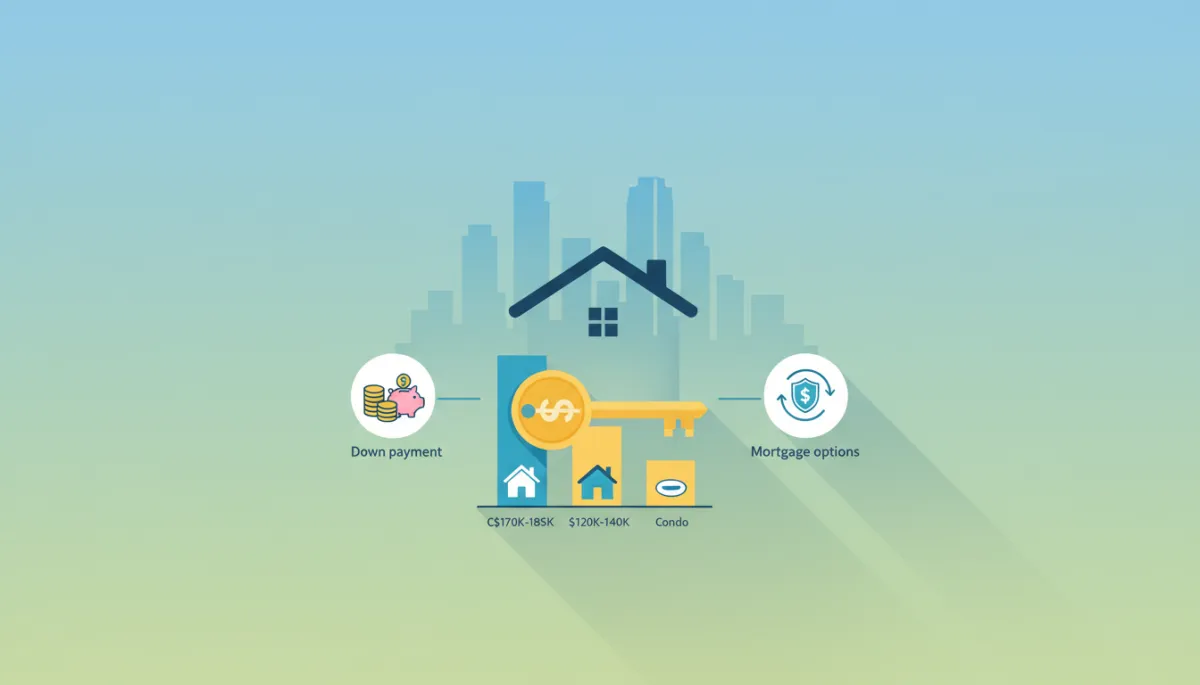
Calgary Home Buying Salary Guide 2026
Calgary Housing Market, Home Buying Salary, Income Requirements
What Salary Do You Need to Buy a House in Calgary (Based on May 2026 Prices)
In Calgary’s 2026 market, you can earn the “right” salary on paper and still feel like home ownership is out of reach—or earn less than you think and still make a smart move. This guide shows you what income you need, what that buys you, and how to choose the right next step for your situation, without getting lost in mortgage jargon.
Income-to-Home Price Matrix (Quick 2026 Snapshot)
Before we dive into market stats, here’s the big picture of what different household incomes can realistically buy in Calgary in 2026, assuming roughly 20% down, a 25‑year amortization, and current stress‑test rules:
Household income $80,000–$90,000: Typical max price range of about $300,000–$350,000, usually buying apartment condos or entry‑level townhomes in outer communities.
Household income $100,000–$120,000: Typical max price range of about $380,000–$450,000, often supporting row/townhomes in many areas and some smaller duplexes.
Household income $125,000–$155,000: Typical max price range of about $500,000–$650,000, opening up semi‑detached homes and starter detached homes in select communities.
Household income $170,000–$185,000: Typical max price range of about $700,000–$775,000, aligning with benchmark detached homes in many established suburbs.
📌 Key takeaway: The same salary can buy very different homes depending on your down payment, debts, and neighbourhood—but this matrix is a solid starting point.
A quick look at the Calgary housing market in May 2026
Calgary’s housing market in May 2026 is cooler than the frantic years we’ve just come through, but it’s still competitive. The Calgary Real Estate Board’s benchmark price for all residential properties was around $570,500, with just over 2,100 sales and inventory slightly higher than usual, pointing to a more balanced market overall (CREB data via Canadian Mortgage Trends).
Behind that single number, though, different property types tell very different affordability stories – which is exactly why your home-buying salary target depends so much on what you want to buy and how much you can put down.
Benchmark prices by property type (May 2026)
Using CREB’s May 2026 benchmark prices (Canadian Mortgage Trends, June 2026), here’s the snapshot we’ll base our income estimates on:
Detached home: $747,800 (benchmark)
Semi‑detached: $691,100
Row/townhouse: $422,300
Apartment condo: $300,400
These benchmarks represent “typical” homes in each category, and they line up reasonably well with other 2026 Calgary real estate data from sources like WealthNorth and Gold Lion Mortgages, which we’ll lean on for income estimates.
How much income do you need? (By home type)
Instead of getting deep into mortgage theory, let’s stay practical: lenders use the federal mortgage “stress test,” which assumes a rate about 2% higher than what you actually pay. That generally pushes the income requirements in Calgary about 20–25% higher than what a simple online calculator might suggest (Gold Lion Mortgages, 2026). What matters most is how that translates into real decisions for you.
Detached home: about C$170,000–C$185,000 household income
For a benchmark detached home around $747,800, most recent affordability studies suggest you’ll need a gross household income in the C$170,000 to C$185,000 range in 2026, assuming:
Around 20% down (to avoid CMHC insurance)
25‑year amortization
A stress‑test rate in the 6% range
That lines up with WealthNorth’s estimate that a typical detached home, around $800,000, requires roughly $150,000–$175,000 in income, depending on exact rates and debts.
Semi‑detached and row homes: mid‑range salary targets
If a full detached feels out of reach, Calgary’s semi‑detached and row homes can bring the target income down noticeably:
Semi‑detached (~$691,100): plan on roughly $125,000–$155,000 household income, similar to WealthNorth’s $126,000–$155,000 estimates for this price band.
Row/townhouse (~$422,300): a benchmark row home usually needs about $100,000–$110,000 in income, again consistent with WealthNorth’s townhouse range.
Apartment condos: the friendliest option for first‑time buyers
For many first‑time homebuyers, a condo is the most realistic starting point in the Calgary housing market. With benchmark prices around $300,400, and typical 2026 assumptions (20% down, 25‑year amortization, stress test), you’re generally looking at a required income in the $80,000–$90,000 range (WealthNorth, 2026).
Salary-to-Neighbourhood Matrix (Quick Comparison)
To make things more concrete, here’s a simple salary-to-neighbourhood matrix tying income, typical home type, and example communities together.
Household income $80,000–$90,000: Typically supports an apartment condo or smaller townhome in areas like Saddleridge, Skyview Ranch, Copperfield, Legacy, or Evanston.
Household income $100,000–$120,000: Often buys a row/townhouse in communities such as Redstone, Nolan Hill, Auburn Bay, Mahogany, or Silverado.
Household income $125,000–$155,000: Opens up semi‑detached or smaller detached homes in Coventry Hills, Panorama Hills, Tuscany, or Evergreen.
Household income $170,000–$185,000: Aligns with benchmark detached homes in Signal Hill, West Springs, Shawnessy, or Cranston.
💡 Dual‑income snapshot: Two partners each earning $75,000 (combined $150,000) often land in the semi‑detached or smaller detached range in family suburbs like Tuscany or Evergreen, assuming solid credit and a healthy down payment.
Monthly ownership cost examples (what this feels like per month)
Knowing the salary is helpful, but most buyers really want to know: what will this cost me every month? Here are rough, ballpark examples for 2026 (principal + interest + property tax + condo fees where applicable, excluding utilities and insurance):
Apartment condo (~$300,000): ~$2,100–$2,400/month including mortgage, taxes, and typical condo fees.
Row/townhouse (~$420,000): ~$2,600–$3,000/month, depending on fees and location.
Semi‑detached (~$690,000): ~$3,800–$4,300/month with taxes.
Detached (~$750,000): ~$4,200–$4,700/month with taxes, assuming 20% down.
Side‑by‑side ownership cost comparison
Apartment condo (~$300,000): Estimated monthly cost of $2,100–$2,400, typically suited to household incomes around $80,000–$90,000.
Row/townhouse (~$420,000): Estimated monthly cost of $2,600–$3,000, usually matched with incomes of about $100,000–$120,000.
Semi‑detached (~$690,000): Estimated monthly cost of $3,800–$4,300, fitting typical household incomes of roughly $125,000–$155,000.
Detached (~$750,000): Estimated monthly cost of $4,200–$4,700, generally requiring household incomes in the $170,000–$185,000 range.
💡 Pro Tip: Compare these ranges to your current rent plus savings. If your future ownership cost is only slightly higher than what you’re already paying and saving, you may be closer than you think.
Quick affordability calculator example
Use this as a simple mental model for 2026 (assuming good credit and modest debts):
Rule of thumb: Every $10,000 of stable household income supports roughly $45,000–$55,000 of purchase price with 20% down.
Example 1 (dual income): Two partners, each earning $65,000 (combined $130,000), with $120,000 saved for a down payment, can often target a home in the $600,000–$650,000 range—typically a semi‑detached or smaller detached in family suburbs.
Example 2 (single income): One buyer earning $90,000 with $70,000 down might reasonably look around $375,000–$425,000, which often means a condo or townhome in an outer community.
Most common first‑time buyer mistake: Shopping by maximum approval instead of monthly comfort. If the numbers only “work” when you cut out travel, savings, and fun, the home is probably too much house for right now.
The cost of waiting (in a steady Calgary market)
Waiting can be wise if you’re paying down debt or building a stronger down payment—but there’s a cost to sitting on the sidelines too.
If prices rise modestly: A 3% annual increase on a $420,000 townhome is about $12,600 in one year—more than many people can save in the same time.
If rates tick up: A 0.5% rate increase can add $150–$250/month to the payment on a typical Calgary mortgage, even if prices stay flat.
But if you’re not ready, Forcing a purchase before you have an emergency fund or stable income can be even more expensive if you’re forced to sell in a downturn.
Cost‑of‑waiting sweet spot: If you’re within ~12–18 months of being ready, it often makes sense to buy once you hit your comfort criteria instead of chasing the “perfect” timing.
Calgary Homeownership Path™: a simple progression model
Think of buying in Calgary as a pathway, not a single leap. A simple Calgary Homeownership Path™ might look like this:
Step 1 – Entry condo: Buy a condo in an emerging community for $280,000–$320,000 to build equity and establish your track record as a homeowner.
Step 2 – Lifestyle townhome: After 3–7 years, use built‑up equity and higher income to move into a row or townhome with more space, parking, and possibly a small yard.
Step 3 – Family semi / detached: As your household income grows (often via dual incomes), trade up to a semi‑detached or detached home in your preferred school district or commute zone.
Step 4 – Long‑term “forever-ish” home: Eventually, you consolidate into the home that fits your long‑term lifestyle, often with a suite or extra space for multigenerational living or work‑from‑home.
Path mindset: Your first purchase doesn’t need to tick every box. It just needs to move you one clear step along your Calgary Homeownership Path™ without stretching you too thin.

Condos and townhomes often bring Calgary homeownership within reach for an income of around $80k–$110k.
Why does the down payment size matter so much
Your down payment size is one of the biggest levers you have to lower the salary a lender will require. A larger down payment:
Reduces the mortgage amount and your monthly payment
Can help you avoid CMHC mortgage insurance if you reach 20% down
Lowers your debt‑service ratios, which are key to mortgage qualifications
For example, putting 10% down on a $750,000 detached home versus 20% down could easily bump your required income by tens of thousands of dollars. The more you can save up front, the more flexibility you’ll have in both home choice and lender options.
💡 Friendly tip for first‑time buyers: If 20% down on a detached feels impossible, consider a smaller property type now, build equity, and move up later. You’ll often need far less income to qualify.
Using the FHSA and RRSP Home Buyers’ Plan to boost your down payment
Two federal programs can make a meaningful difference for Calgary first‑time buyers:
First Home Savings Account (FHSA): Lets eligible first‑time buyers contribute up to a lifetime limit (with annual caps), get a tax deduction on contributions, and withdraw funds tax‑free for a qualifying home purchase.
RRSP Home Buyers’ Plan (HBP): Allows you to withdraw up to a government‑set limit from your RRSP for a down payment, then repay it over time without immediate tax.
Used together, FHSA and HBP can add tens of thousands of dollars to your down payment, which directly lowers both your required income and your monthly payment on a Calgary home.
How property type and mortgage options influence affordability
We’ve already seen how property type dramatically changes the income you need: a condo might work at $85,000, while a benchmark detached home can push you toward $180,000. But your mortgage options also play a quiet, powerful role in affordability. Rather than memorizing every rule, focus on a few levers you can actually choose.
Amortization length: A 30‑year amortization (where available) lowers your monthly payment and can reduce the income needed to qualify, though you’ll pay more interest over time.
Fixed vs. variable rates: Different rates slightly affect the stress‑test numbers, affecting how much of your home your salary supports.
Secondary suites: Some lenders will count a portion of rental income from a legal basement suite, effectively lowering the salary you need on paper (Gold Lion Mortgages, 2026).
For buyers who are close to qualifying, playing with these levers – especially amortization and suite income – can make the difference between “not yet” and “you’re approved.”
Qualification vs. Affordability: why “approved” doesn’t always mean “comfortable.”
One of the most important (and most overlooked) ideas in home buying is the gap between what a bank says you qualify for and what actually feels affordable in real life.
Qualification: Based on formulas, stress‑test rates, and debt ratios. This is the maximum the lender is comfortable with on paper.
Affordability: Based on your lifestyle, savings goals, childcare costs, travel, and how much “breathing room” you want each month. This is the number you should be comfortable with.
Contrarian insight: Many buyers focus on “How much will the bank give me?” A smarter question in 2026 Calgary is “How much can I borrow and still live the life I want?” That number is often lower—and that’s okay.
Are you financially ready to buy? (Quick checklist)
Stable income: At least 2+ years of consistent employment or self‑employment income your lender can document.
Emergency fund: 3–6 months of living expenses saved outside your down payment so a job change or car repair doesn’t derail you.
Manageable debts: Credit cards, car loans, and lines of credit under control so your total debt payments stay comfortably within lender ratios.
Realistic budget: You’ve run the numbers on mortgage + taxes + utilities + maintenance and still have room for savings and a life.
Aligned timeline: You can see yourself staying in Calgary and in your first home for at least 3–5 years.
📌 Ready‑to‑buy rule: If you can say “yes” to most of this checklist and the monthly numbers fit your comfort zone, you’re likely closer to ready than you think.
Calgary Home Affordability Framework™
To turn all of this into clear next steps, use this simple Calgary Home Affordability Framework™. It’s a four‑step way to decide what to buy, not just what you can technically qualify for.
Know your real monthly comfort zone. Decide the top number you’re willing to spend on housing (mortgage + taxes + fees), not just what the bank approves.
Match your income to a home type. Use the income ranges in this guide to narrow in on condos, townhomes, semis, or detached homes that align with both your salary and comfort zone.
Choose your neighbourhood tier. Decide whether you’re aiming for established inner‑city, mid‑ring family suburbs, or newer outer communities—and adjust your expectations on size and finish accordingly.
Plan your “next move” path. If your dream home is a stretch today, pick the property that gets you closest while still feeling comfortable, then map out a 5–7 year plan to trade up.
📌 Framework in one line: Start with your monthly comfort zone, then back into price, property type, and neighbourhood—never the other way around.
Calgary neighbourhood examples (what your income might buy, where)
To make this more concrete, here are illustrative examples of what different income levels might afford in real Calgary neighbourhoods, based on 2026 pricing patterns. Exact listings will vary, but the patterns are useful:
$80,000–$90,000 income: Think apartment condos in communities like Saddleridge, Skyview Ranch, Copperfield, Legacy, or Evanston. You might trade some square footage or finishes for a newer building or better transit access.
$100,000–$120,000 income: Row and townhomes in areas such as Redstone, Nolan Hill, Auburn Bay, Mahogany, or Silverado. In some outer communities, you may find double‑garage townhomes within reach.
$125,000–$155,000 income: Semi‑detached and smaller detached options in family‑oriented suburbs like Coventry Hills, Panorama Hills, Tuscany, or Evergreen, often with 3 bedrooms and a yard.
$170,000–$185,000 income: Benchmark detached homes in established areas such as Signal Hill, West Springs, Shawnessy, or Cranston, or larger homes in newer outer communities.
Within each income band, you’ll constantly be trading off between location, size, and finish: closer‑in and smaller, or farther‑out and larger. The right answer depends on your commute, family plans, and lifestyle.
Putting it all together: choosing the right Calgary home for your income
If we boil everything down, here’s a friendly rule‑of‑thumb guide for 2026:
$80,000–$90,000 income: Focus on apartment condos, possibly smaller townhomes in more affordable areas.
$100,000–$120,000 income: Row homes and townhouses in many parts of Calgary become realistic options.
$125,000–$155,000 income: Semi‑detached homes and some smaller detached properties start to open up.
$170,000–$185,000 income: You’re in the typical range for a benchmark detached home around $750,000 in Calgary.
The key is understanding how property type and down payment work together to reduce income requirements. Starting with a condo, stretching your down payment, or choosing a row home instead of a detached property can shave tens of thousands of dollars off the salary a lender will require.
If you’re a first‑time buyer in the Calgary real estate market, don’t be discouraged by the detached‑home numbers. Focus on where your current income fits today, pick the property type that matches it, and remember: your first place doesn’t have to be your forever home – it’s your stepping stone. The most important move isn’t buying your “dream house” right away; it’s getting into the right home, in the right area, at a payment you can live with for years. From there, Calgary’s market—and your income—can do the rest.
Affordability‑first thesis: In 2026, Calgary, the smartest buyers don’t ask, “What’s the biggest house I can get?” They ask, “What’s the most life I can live while owning a home?” When you lead with affordability—your income, your down payment, and your comfort zone—homeownership becomes not just possible, but sustainable.


